.svg)
March 23, 2026
5
min read
Why moving infrastructure before understanding architecture and operational risk often makes systems harder to manage, not easier.
Cloud migration has become a default recommendation. Legacy on-premise systems are expensive to maintain. The cloud promises scalability, flexibility, and reduced operational burden. The narrative is compelling.
But migration is not modernization. And moving a broken system to the cloud does not fix it—it often makes the problems worse.
If you want modernization outcomes without rewrites, start with legacy SaaS modernization without rewrites.

Cloud migration assumes that infrastructure is the bottleneck. That if the system ran in a more flexible environment, it would perform better, scale more easily, and cost less to operate.
This is true for some systems. But for many enterprise platforms, the real constraints are not infrastructure—they are architecture, process, and operational practice.
Related: Why most SaaS rewrites fail
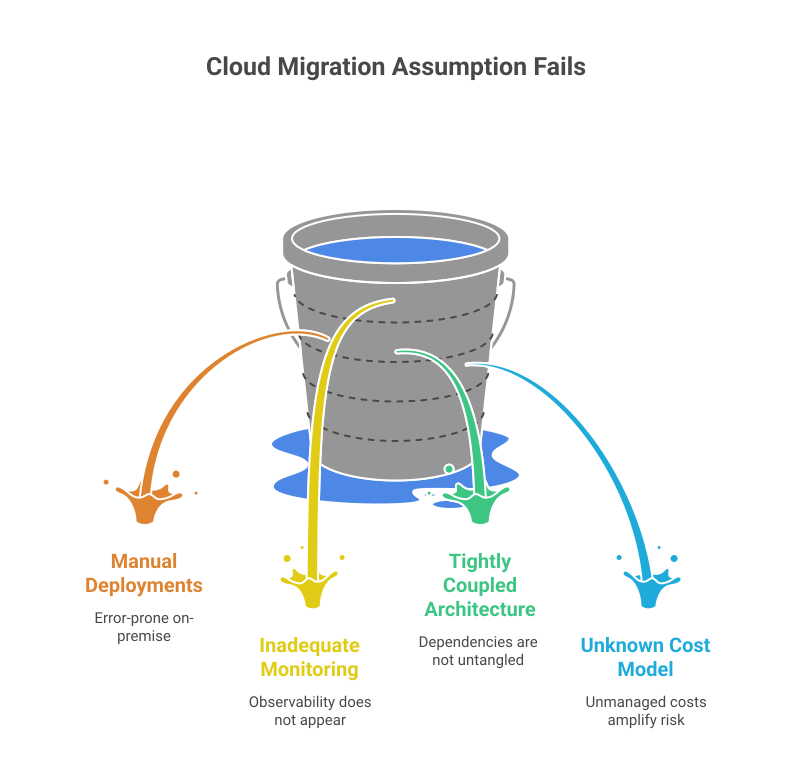
Cloud environments are fundamentally different from traditional infrastructure. They require different tooling, different operational patterns, and different cost models. Teams that migrate without understanding these differences often find themselves managing more complexity, not less.
Networking configurations that were implicit on-premise must now be explicit. Security models that relied on perimeter defenses must be redesigned. Cost management becomes a continuous exercise rather than a fixed budget line.
These are solvable problems. But they require investment—in training, in process changes, in architectural refactoring. Migration does not eliminate this work. It frontloads it.
If your goal is predictable execution, this is less about “moving to AWS” and more about engineering practices: observability, change control, rollback, and operational discipline.
Migration is the right move when the current infrastructure is a constraint.
But even in these cases, migration should not be the first step. The first step is assessment: understanding what the system does, how it is deployed, where the risks are, and what operational practices need to change.
Migration should follow clarity, not precede it.
Start here: SaaS Modernization & Cloud Readiness Audit
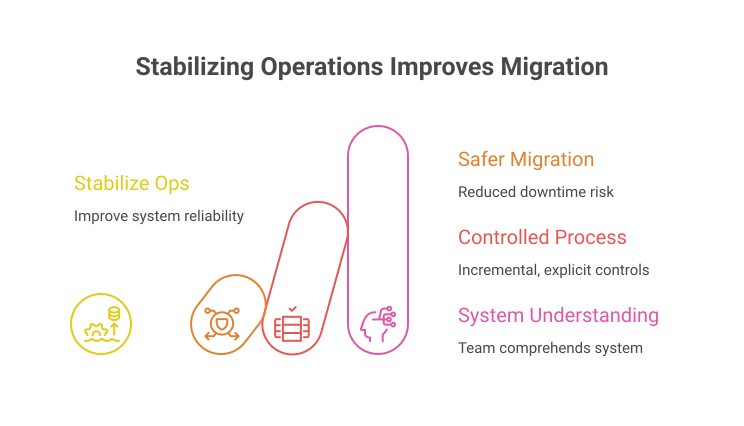
Before moving infrastructure, stabilize operations:
These improvements pay off regardless of where the system runs. And they make migration far safer when it does happen.
If downtime risk is a core constraint, see: Modernizing without downtime: what actually works
Once operational maturity is in place, migration becomes a controlled process rather than a high-risk leap. The team understands the system. The system can be observed. Failures can be detected and rolled back.
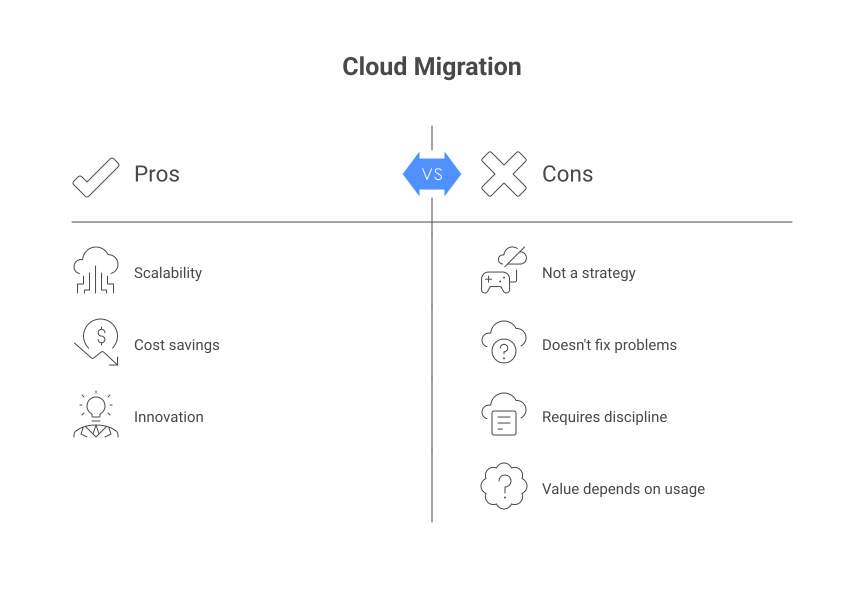
Migration is not a strategy. It is a tactic.
The cloud is infrastructure. What you build on it—and how you operate it—determines whether migration delivers value or just moves problems to a more expensive environment.
Related: Why stability is a competitive advantage
Get a risk-first view of architecture, operational readiness, and sequencing—before committing to a cloud move.