
In enterprise systems, modernization is not just a delivery problem. It is a sequencing problem. Crawl–walk–run gives teams a practical way to reduce unknowns, make change repeatable, and accelerate without betting uptime or trust on one large decision.
Modernization fails most often for one reason: teams try to “run” before the platform is safe to change.
Enterprise systems are rarely broken in obvious ways. They’re fragile in specific ways: undocumented dependencies, hidden data coupling, manual release steps, production-only behaviors, and compliance constraints that appear late. When you modernize without addressing those realities, you don’t get speed—you get incidents.
The crawl–walk–run approach is a simple discipline that helps teams modernize without betting uptime, revenue, or customer trust on one large decision.
It’s not a maturity model. It’s a sequencing model: build safety first, then repeatability, then acceleration.
Why this approach works in real enterprise environments
Enterprise platforms usually have:
Live revenue dependence (downtime has direct cost)
Integration sprawl (vendors, batch jobs, file transfers, message buses)
Regulated requirements (auditability, retention, least privilege)
Legacy surface area (old runtimes, brittle data models, tribal knowledge)
In those conditions, the question isn’t “How fast can we modernize?”It’s “How do we modernize while staying operational?”
Crawl–walk–run answers that by forcing entry criteria and exit criteria for each phase—so modernization remains controlled and reversible.
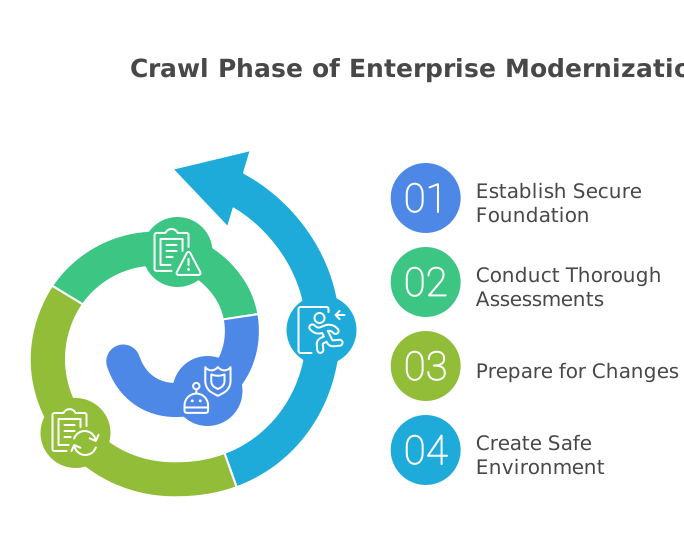
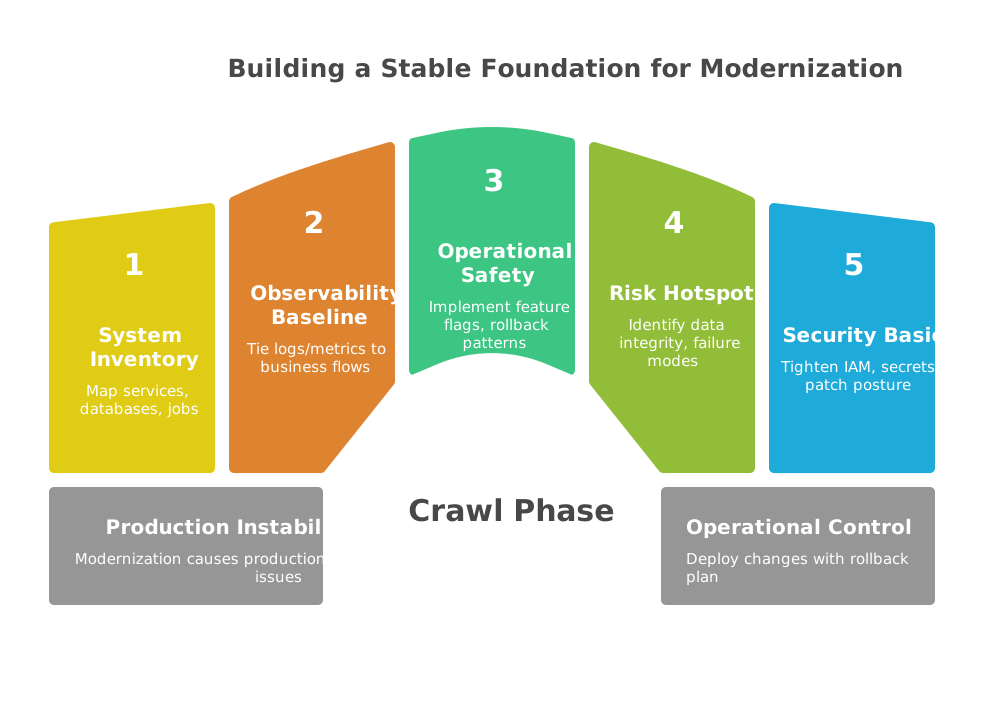
Phase 1: Crawl — Make the system safe to change
Goal: Reduce unknowns and create operational control.
In crawl, you are not “shipping transformation.” You are building the foundation that prevents modernization from turning into production instability.
Common crawl outcomes:
System inventory + dependency map (services, databases, batch jobs, integrations)
Observability baseline (logs/metrics/traces tied to real business flows)
Operational safety rails (feature flags, rollback patterns, release controls)
Risk hotspots identified (data integrity zones, failure modes, brittle modules)
Security basics tightened (IAM hygiene, secrets handling, patch posture)
Exit criteria example:
You can deploy changes with a defined rollback plan, and you can detect failures quickly enough to limit blast radius.
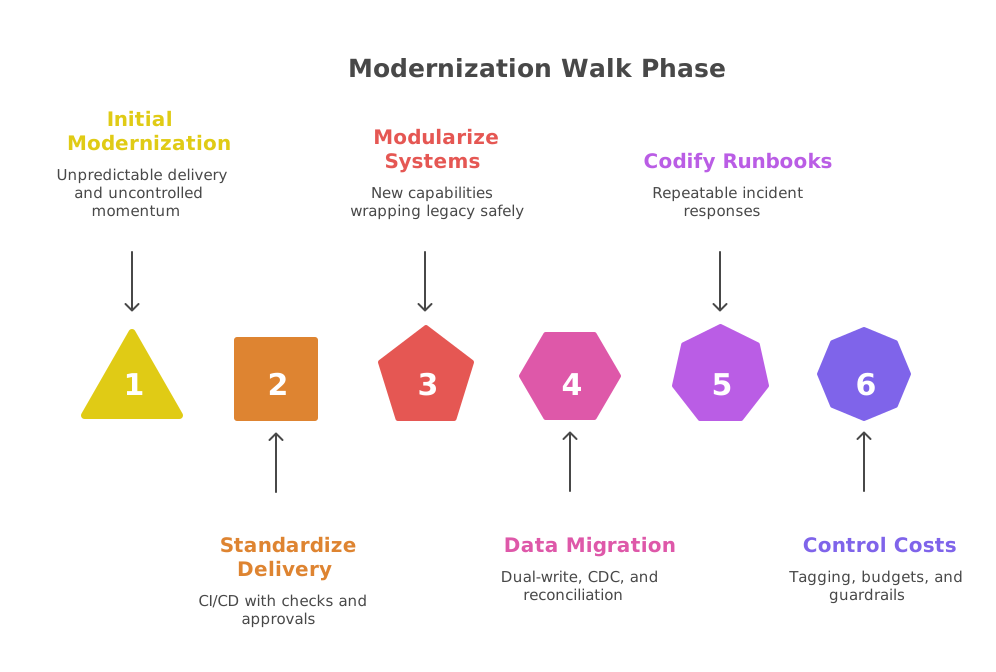
Phase 2: Walk — Make change repeatable and measurable
Goal: Create predictable delivery and controlled modernization momentum.
Walk is where modernization starts to compound—because the team is no longer re-learning the same lessons every release.
Common walk outcomes:
Standardized delivery path (CI/CD with checks, approvals, environment parity)
Modularization / strangler slices (new capability wrapping legacy safely)
Data migration strategy (dual-write, CDC, reconciliation, backfill plans)
Runbooks + incident patterns codified (repeatable responses)
Cost and capacity controls (tagging, budgets, right-sizing guardrails)
Exit criteria example:
You can deliver incremental modernization changes weekly without increasing incident rate.
Phase 3: Run — Optimize and accelerate without losing control
Goal: Move faster because the platform can handle it.
Run is not “move fast and break things.” Run is where you can confidently take on larger changes because crawl and walk removed the failure multipliers.
Common run outcomes:
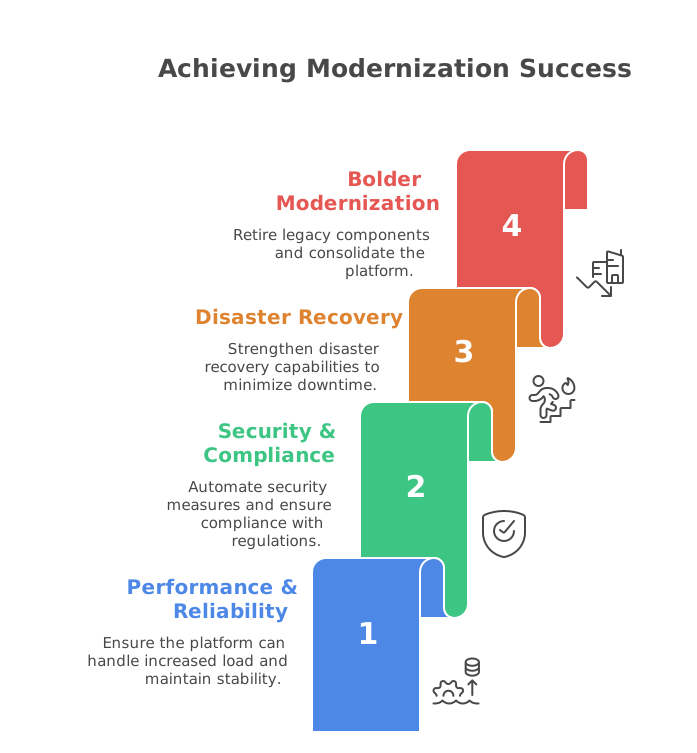
Performance + reliability engineering (SLOs, resilience patterns, load testing)
Advanced security/compliance automation (policy-as-code, continuous evidence)
Stronger DR posture (tested recovery, automated restoration, reduced RTO/RPO)
Runbooks + incident patterns codified (repeatable responses)
Bolder modernization (retire major legacy components, platform consolidation)
Exit criteria example:
The platform can absorb significant architectural change without operational surprises.
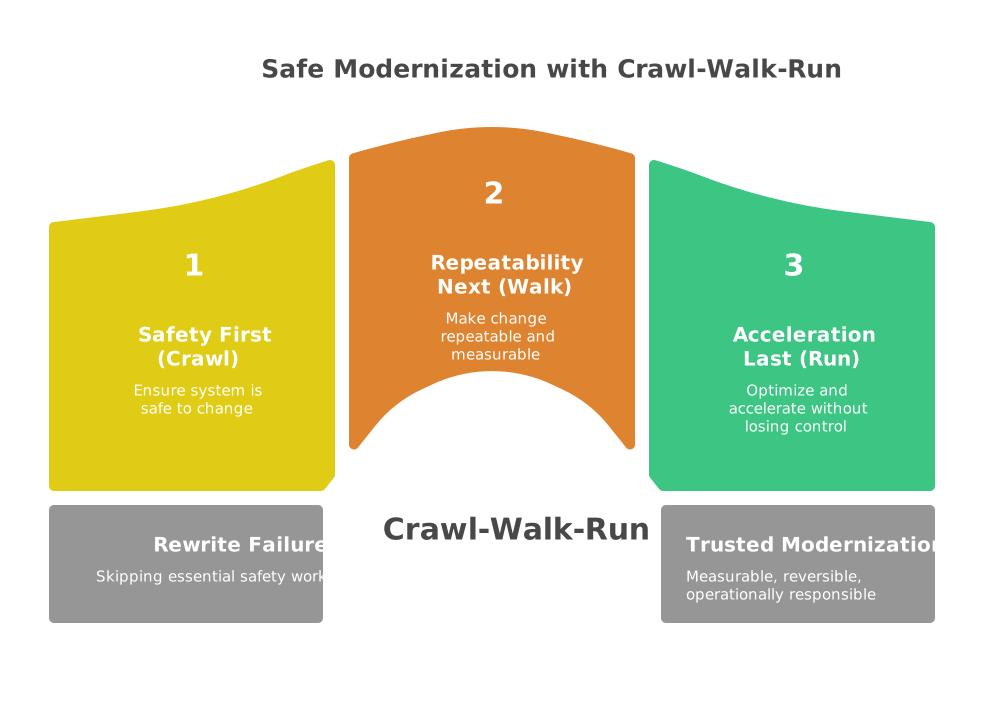
The key idea: sequencing beats ambition
Most “rewrite” failures aren’t caused by lack of skill. They’re caused by skipping the work that makes change safe.Crawl–walk–run prevents that by ensuring:
Safety first (crawl)
Repeatability next (walk)
Acceleration last (run)
It creates modernization progress that leadership can trust—because it stays measurable, reversible, and operationally responsible.
How we apply this in modernization audits
In a modernization audit, we map your platform into a crawl–walk–run roadmap with:
The highest-risk areas to stabilize first
The minimum guardrails needed for safe change
A phased plan that avoids downtime bets
Clear “Now / Later / Not Yet” sequencing based on risk, not preference
The result is not a “cloud migration plan.”It’s a controlled modernization plan that protects uptime and unlocks long-term velocity.