
About DuskByte
Seven people. The two who design your system also review the code.
Binny and Deepak set the architecture and review every build, whoever writes it. Discovery, build sprints, launch and support afterwards: the same team throughout.
Our story
DuskByte was founded in 2018, growing out of Binny Chanchal's software engineering practice, a career that started in 2009, into a small, architect-led team. Along the way, one client relationship grew into tax-protest, CRM and appraisal-automation infrastructure now serving 90,000+ homeowners: Chandler Crouch, starting with a single property-tax protest tool. That pattern, going deep with clients instead of moving on to the next logo, is how we still work today.
We use AI tooling heavily, and it is a real part of how we ship. The architecture, the review and the quality bar stay human led. Go-Insights, iTwin-AI, and OnlineCourses-AI are the proof of that, not a claim we're asking you to take on faith.
How we work
01
Discovery
We scope the problem with you directly, with no account manager relaying requirements. Binny or Deepak is on the call.
02
Build sprints
Short, visible sprints. You see working software in the first couple of weeks, not a deck three months in.
03
Launch
We ship to production and stand behind the deploy: infrastructure, monitoring, and rollback plans included, not an afterthought.
04
Support
The team that built it stays on to run it. No hand-off to a different support org after launch.
Our method
Why the work goes fast
Most of what slows a project down is rework: decisions made before anyone understood the system, then unpicked later. These four principles exist to remove that. Settling the architecture first is precisely what lets us put working software in front of you in weeks: the time goes into building rather than into undoing.
Clarity and assessment before execution
We understand the system before proposing changes to it: the coupling, the constraints, and what actually breaks first. Work that starts from an accurate model of the platform doesn't get rebuilt halfway through.
Phased, incremental change
Change lands in steps that can each be validated, not one large cutover. Every step is small enough to reason about, and small enough to undo.
Rollback-safe modernisation
Every deployment ships with an explicit way back. A bad release becomes a reversible event measured in minutes, rather than an incident measured in days.
Stabilisation before acceleration
We get a platform steady before adding load, features or AI on top of it. Speed built on an unstable base is borrowed, and it gets repaid with interest.
The team
Who actually builds your project
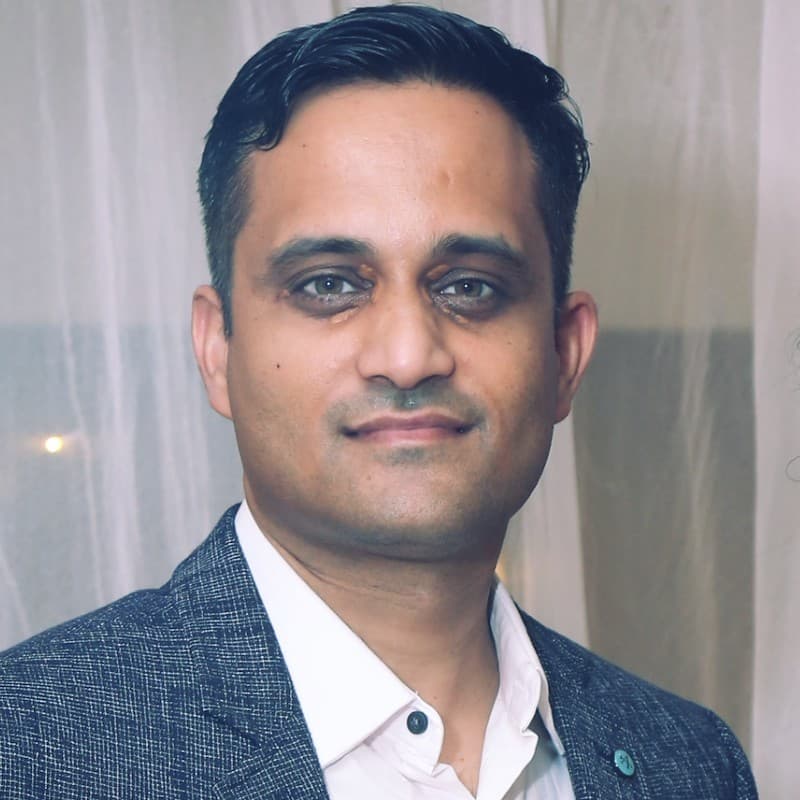
Binny Chanchal
Founder & Principal Architect
Sets the architecture on every DuskByte project, reviews it end to end before it ships, and holds the relationship on DuskByte's longest-running engagements. Full-stack across Python, Go, Node.js, and Next.js, with deep AWS infrastructure experience: containers, serverless, and the networking and delivery layer that keeps a platform running under real load.
Since 2009 · 17+ years

Deepak Kundra
Lead Architect & AI Implementation Engineer
The second reviewer on every architecture decision DuskByte makes, and the one who takes AI from a pitch-deck feature to something running in production, from retrieval pipelines and model deployment on AWS to generative image and video work. Full-stack across Python, Go, and Node.js/Next.js, with hands-on experience on Bedrock and SageMaker backing DuskByte's AI-accelerated claim with real deployment work, not just tooling.
Since 2015 · 11+ years

Ajay Walia
Data Engineer & Automation Developer
Builds the data pipelines and third-party integrations behind DuskByte's marketing-analytics and workflow-automation work, turning scattered data into something a client can act on.
Since 2021 · 5+ years

Atul Lohia
UI/UX Designer & Design Systems Lead
Designs every interface DuskByte ships, from first wireframe to production-ready component, and builds the design systems that keep a product consistent as it grows.
Since 2022 · 4+ years

Virendra Kumar
Backend Engineer & DevOps
Builds and runs the backend behind DuskByte's SaaS platforms: APIs, databases, and the deployment pipelines that keep them stable under real usage.
Since 2021 · 5+ years

Sumit Kumar
Full-Stack Developer
Builds across the stack on DuskByte's web app and SaaS projects, working inside the architecture Binny and Deepak set before a project starts.
Since 2024 · 2+ years

Avneet Kaur
QA & Test Engineer
Tests every release before it ships: functional and regression coverage across DuskByte's client platforms, so a deploy is verified rather than hoped for.
Since 2020 · 6+ years
Want to talk to the person who'd architect your project?
Book a call with Binny directly. No account manager in between.