
A practical guide for foodservice buying groups modernizing supplier, pricing, promotions, and audit workflows without losing commercial control or operational continuity.
Foodservice buying groups operate in one of the more operationally complex corners of B2B commerce.
They are not managing a simple product catalog and a few commercial rules.
They are coordinating supplier relationships, onboarding products across multiple categories, handling dynamic price changes, supporting volume-based pricing structures, managing promotional activity, and maintaining enough auditability to explain what changed, when it changed, and why.
In many organizations, these responsibilities still sit across email threads, spreadsheets, shared drives, and disconnected internal systems.
That model can survive for a while.
But once supplier volume grows, promotional activity increases, or pricing pressure becomes more frequent, the commercial team starts spending more time controlling operational noise than making commercial decisions.
That is usually the moment when buying groups begin talking about modernization.
The risk is that modernization is often framed too broadly.
The goal is not simply to “digitize operations” or “replace spreadsheets.”
The real goal is to improve price governance, supplier coordination, and member visibility without creating new operational confusion or losing commercial control in the process.
Why price governance becomes fragile in foodservice buying groups
Foodservice buying groups work across a combination of characteristics that make commercial operations harder to manage than they first appear.
They often deal with hundreds or thousands of SKUs, multiple suppliers, changing costs, volume thresholds, promotion windows, regional considerations, and member-specific commercial expectations. Product data quality can vary. Supplier processes can differ. Approval expectations may be inconsistent. Reference data may be incomplete or duplicated. And changes that look simple in isolation can have ripple effects across catalogs, promotional calendars, member communication, and downstream procurement workflows.
That is why price governance tends to degrade gradually rather than fail all at once.
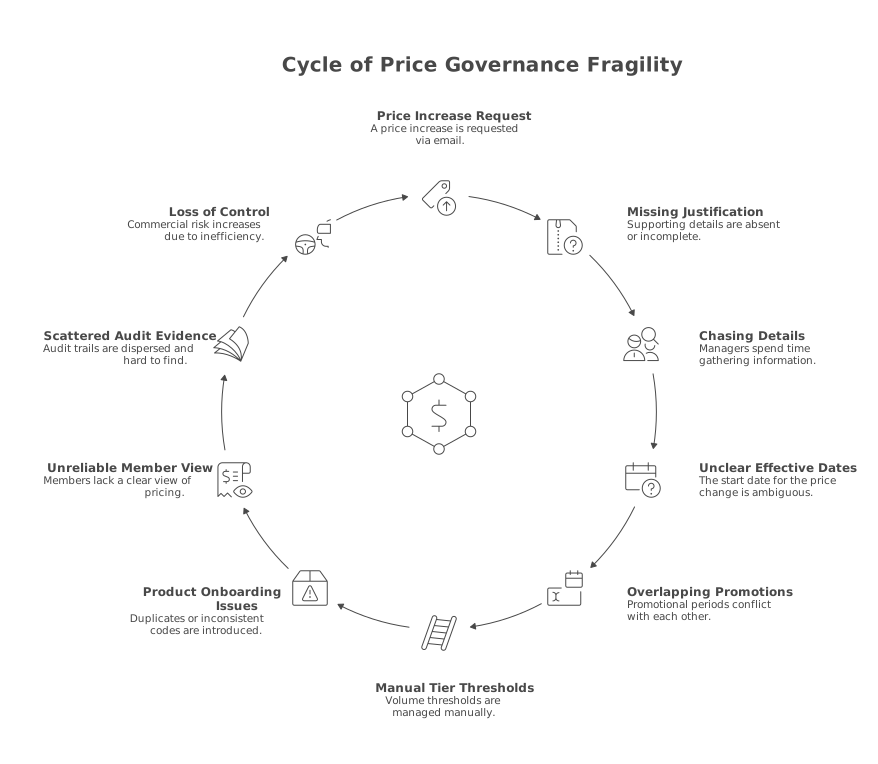
A price increase request arrives through email. Supporting justification is missing or incomplete. Commercial managers spend time chasing details. Effective dates are unclear. Promotions overlap. Tier thresholds are handled manually. Product onboarding introduces duplicates or inconsistent codes. Member organizations do not get a reliable view of current versus upcoming pricing. Audit questions arrive later, but the evidence is scattered.
Over time, the commercial risk is not only inefficiency.
It is loss of control.
The wrong first move: replacing everything with a generic platform
A common mistake in this space is assuming the answer is a broad platform replacement before the actual control problems are understood.
Buying groups do need better systems. But if modernization starts with a generic platform selection exercise and not with the underlying governance model, the organization can end up digitizing the same confusion it already has.
A safer first question is:
Where are pricing, supplier, and promotional workflows currently losing control?
That usually leads to more useful answers than asking which commercial platform has the most features.
In practice, the most valuable improvements often come from giving commercial operations a stronger structure:
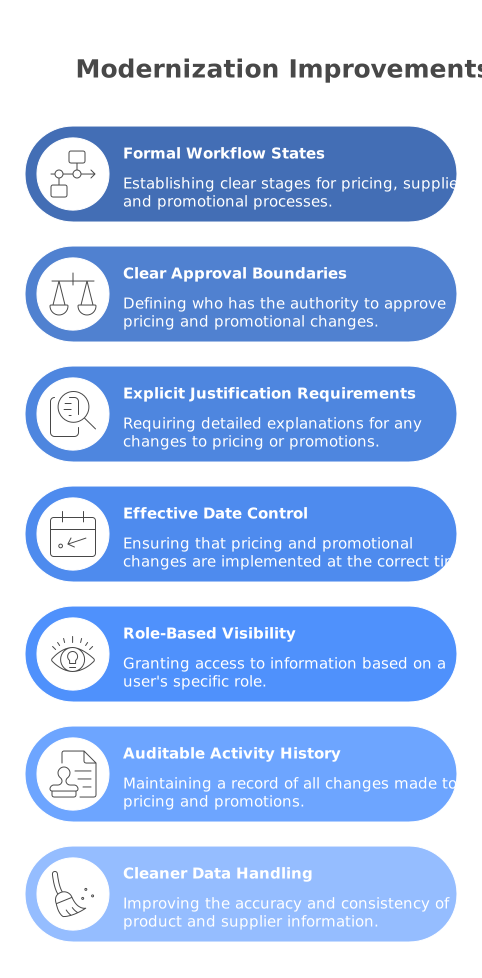
- formal workflow states
- clear approval boundaries
- explicit justification requirements
- effective date control
- role-based visibility
- auditable activity history
- cleaner product and supplier data handling
That is how modernization starts to improve governance rather than just change the interface.
What a stronger price-governance model looks like
In foodservice buying groups, price governance improves when pricing stops being a loose communication process and becomes a structured operational workflow.
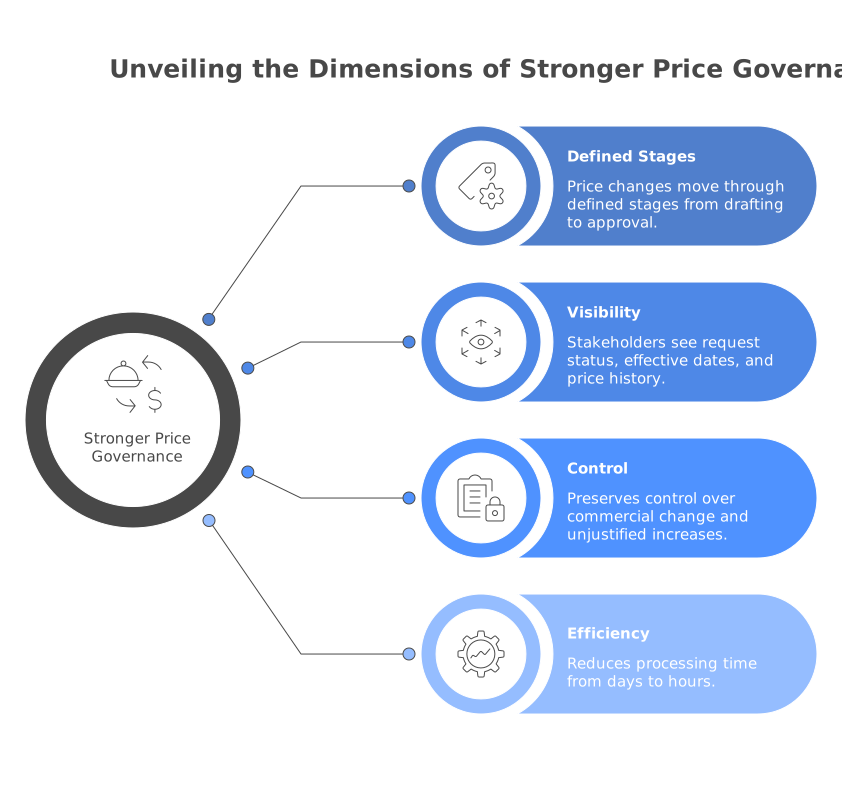
That means price changes are not just “requested.” They move through defined stages.
A commercial team should be able to see whether a request is still being drafted, has been submitted, has been challenged, has been approved or rejected, when it goes live, and when it expires. Supporting documentation should not be optional. Future effective dates should be visible. Price history should be traceable. Stakeholders should know what changed and why.
This matters because price governance is not just about approving or rejecting increases.
It is about preserving control over commercial change.
When that structure is in place, teams can challenge unjustified increases more consistently, communicate changes earlier to members, and reduce the operational drag that comes from reconstructing decisions after the fact.
In one production implementation in this sector, moving from manual price-change handling to structured workflow reduced processing time from roughly 7–12 days to 24–48 hours while also improving documentation and challenge discipline.
That kind of result does not come from automation alone.
It comes from giving the workflow a clearer operating model.
Supplier onboarding and product governance are part of the same problem
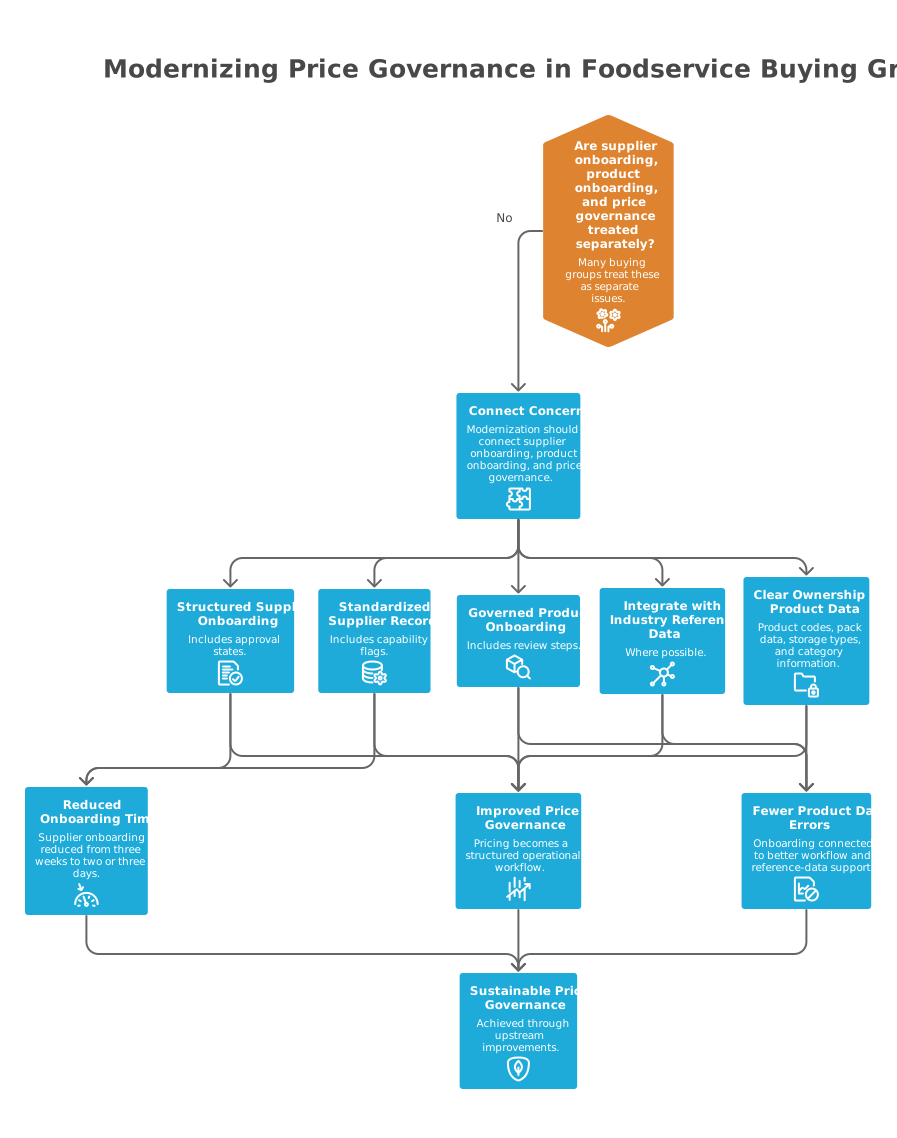
Many buying groups treat supplier onboarding, product onboarding, and price governance as separate issues.
Operationally, they are deeply connected.
If supplier profiles are inconsistent, product workflows are weak, or reference data is unreliable, pricing governance becomes harder almost immediately. The team ends up debating the price of items that are not yet well governed at the catalog level. Category information may be inconsistent. Supplier capabilities may be unclear. Duplicate records can create downstream confusion. Product data gaps can slow approvals. And every weakness upstream increases the cost of commercial control downstream.
That is why modernization should connect these concerns rather than treating them as separate modules.
A stronger model usually includes:
- structured supplier onboarding with approval states
- standardized supplier records and capability flags
- governed product onboarding with review steps
- integration with industry reference data where possible
- clear ownership of product codes, pack data, storage types, and category information
In the same sector implementation, supplier onboarding that once took around three weeks was reduced to two or three days once the process became structured and the records more consistent. Product data errors also fell materially when onboarding was connected to better workflow and reference-data support.
That is not a side benefit.
It is part of what makes price governance sustainable.
Promotions and tiered pricing are where control often breaks down
Foodservice buying groups rarely operate on flat list pricing alone.
They manage promotional campaigns, off-invoice discounts, rebates, volume-based structures, featured deals, and member-facing timing expectations. These are not separate from commercial control. They are one of its most visible tests.
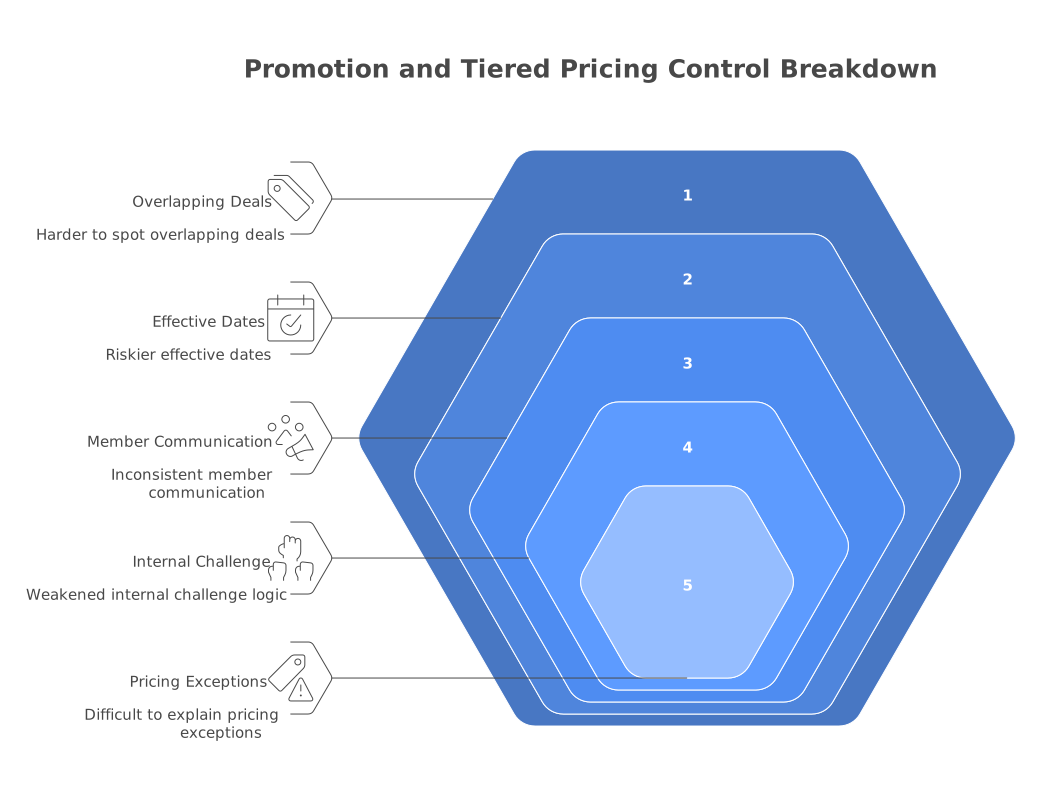
When promotions live in spreadsheets and tiered pricing is handled manually, several things happen quickly:
- overlapping deals become harder to spot
- effective dates become riskier
- member communication becomes inconsistent
- internal challenge and approval logic weakens
- pricing exceptions become more difficult to explain
That is why promotions and tiered pricing need the same discipline as base-price changes.
They need their own governed workflows, date controls, validation logic, and visibility. Promotional calendars should not just be marketing tools. They should be operational control surfaces. Tier thresholds should not just exist in commercial memory. They should be validated, visible, and integrated into the broader pricing workflow.
Where this becomes structured, buying groups usually gain both speed and confidence. Promotional conflicts decline. Members get better visibility. Commercial and marketing teams coordinate more effectively. And the business spends less time dealing with preventable pricing friction.
Auditability is not optional in commercial operations
One of the clearest signs that a buying group has outgrown its current operating model is when audit and accountability depend on reconstructing events manually.
That is usually a symptom of a deeper governance problem.
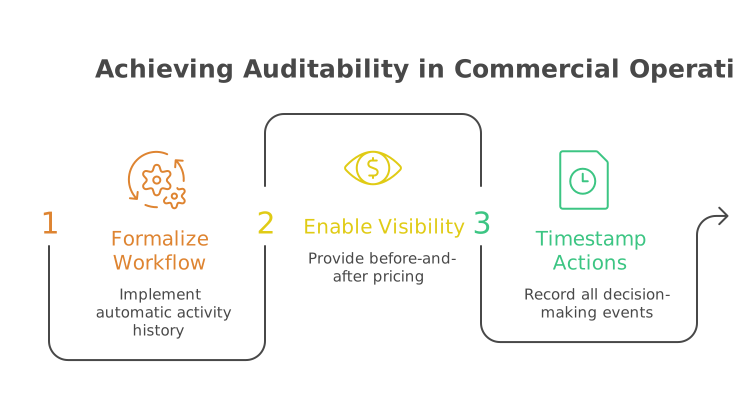
Commercial teams need to know:
- who submitted a request
- who reviewed it
- what changed
- what the previous value was
- what justification was provided
- when the decision was made
- when the new pricing or promotion became active
Without that, the organization is left with weak dispute resolution, limited accountability, fragile compliance posture, and low confidence in its own operational memory.
A better model creates automatic activity history, before-and-after visibility, timestamped actions, and exportable reporting. In the sector implementation behind this guide, full documentation and auditability around price justification moved from partial and inconsistent to complete once the workflow was formalized.
That is a meaningful operational shift.
Because when pricing decisions become easier to explain, they also become easier to govern.
Member visibility is part of governance too
Buying groups sometimes focus modernization almost entirely on internal commercial users.
That is understandable, but incomplete.
Members are part of the governance chain because they are the ones experiencing the output of these workflows.
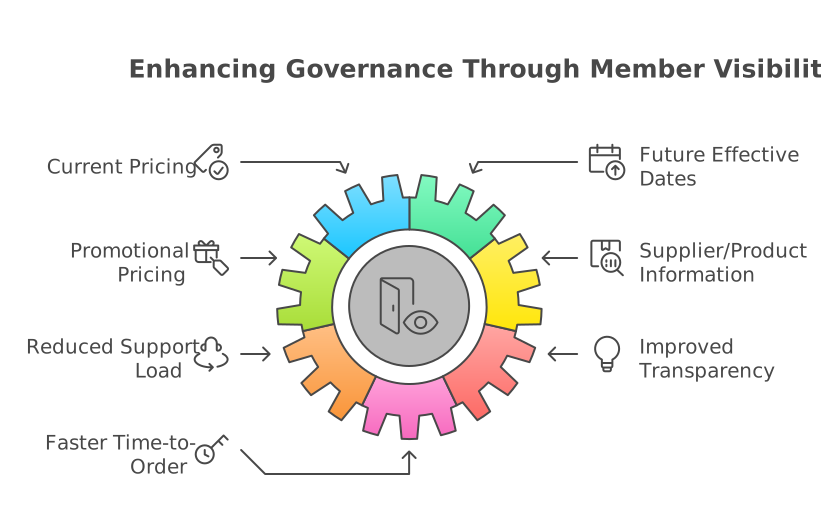
If members cannot clearly see current pricing, future effective dates, promotional pricing, or supplier/product information, internal governance still produces external confusion. Support load rises. Trust falls. Time-to-order slows. And the commercial team becomes a human translation layer between the platform and the member network.
That is why a member-facing catalog with current, future, and promotional pricing visibility can be more than a convenience feature. It can reduce operational noise and improve commercial transparency at the edge of the system.
In the production platform behind this article, self-service pricing visibility materially reduced member support inquiries while improving day-to-day clarity for purchasing teams.
That is another example of modernization improving control rather than just workflow speed.
What technical leaders should evaluate before modernizing
For CTOs, heads of engineering, and platform leaders supporting this domain, the key question is not simply whether the current platform is old.
It is whether the current operating model can still support the business with enough control, speed, and auditability.
Before selecting a solution or rewriting anything, evaluate:
Workflow clarity
Are supplier, product, price, tier, and promotion changes moving through explicit states, or mostly through informal coordination?
Commercial challenge capability
Can the business challenge unjustified increases and document the rationale, or is pricing effectively being passed through without strong control?
Data quality and reference-data support
How much friction comes from inconsistent supplier and product records, duplicate items, or incomplete commercial metadata?
Audit and reporting posture
Can the platform reconstruct critical decisions cleanly, or does every dispute require manual investigation?
Member visibility
Do members have a reliable way to see current and future commercial conditions, or are support teams bridging that gap manually?
Integration reality
How well does the platform connect to industry reference data, ERP, procurement, accounting, or downstream catalog systems?
Security and role boundaries
Are commercial, supplier, and member views appropriately separated with clear permissions and operational controls?
These questions usually reveal more than a feature list ever will.
A better modernization mindset for buying groups
The strongest modernization work in this space usually does not begin with a dramatic replacement program.
It begins with a narrower objective:
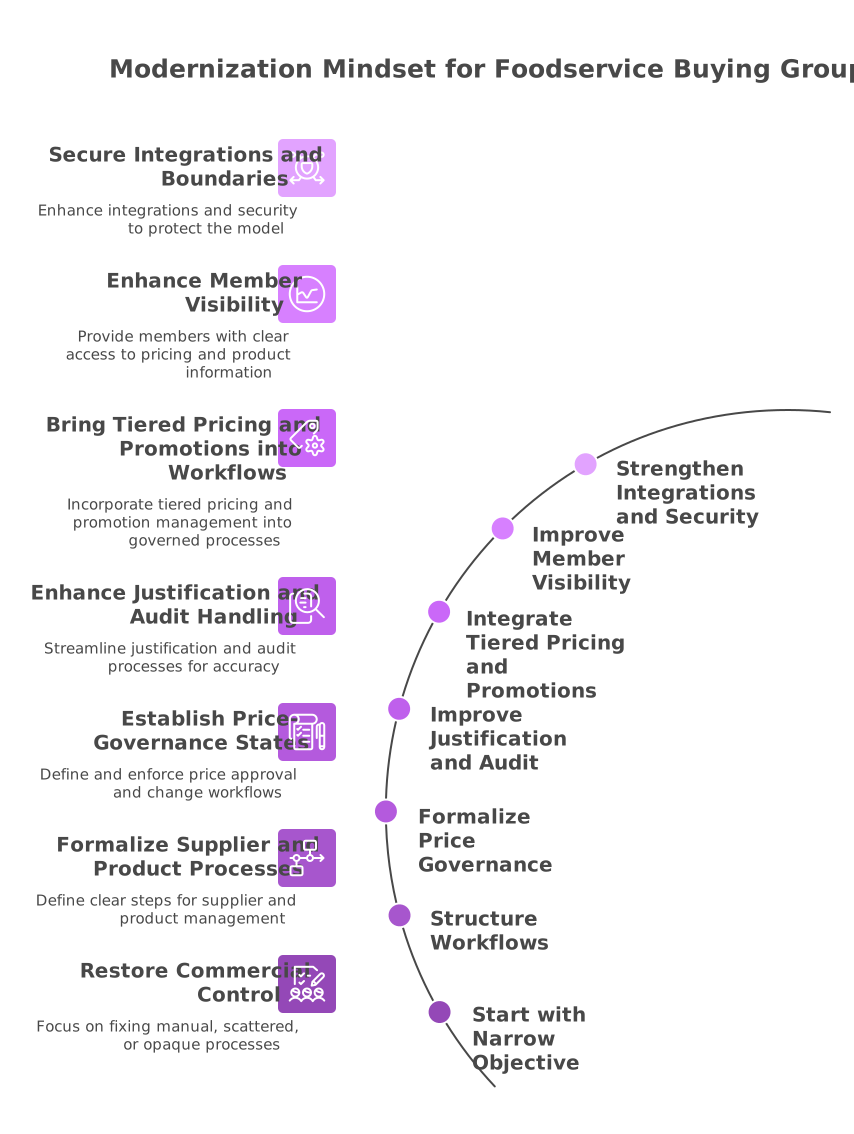
restore commercial control where the current process has become too manual, too scattered, or too opaque to govern well.
That tends to lead toward a safer sequence:
- structure supplier and product workflows
- formalize price-governance states
- improve justification and audit handling
- bring tiered pricing and promotions into governed workflows
- improve member visibility
- strengthen integrations and security boundaries around the model
That is a calmer and more effective path than trying to modernize every commercial surface at once.
In one production implementation in this domain, that kind of structured platform model led to materially faster price processing, dramatically faster supplier onboarding, fewer product data errors, lower member support load, and much stronger auditability.
Those results are useful not because they prove one specific platform is right for every buying group.
They are useful because they show what tends to happen when governance becomes workflow-driven instead of email-driven.
Final thought
Foodservice buying groups do not lose control all at once.
They lose it gradually through disconnected workflows, unclear approvals, weak audit trails, scattered product data, and commercial decisions that live in too many places at the same time.
Modernization helps when it restores structure where that control has eroded.
Not just faster tooling. Not just a cleaner interface.
A stronger operating model for pricing, suppliers, promotions, and member visibility.
That is what allows a buying group to modernize without losing control.