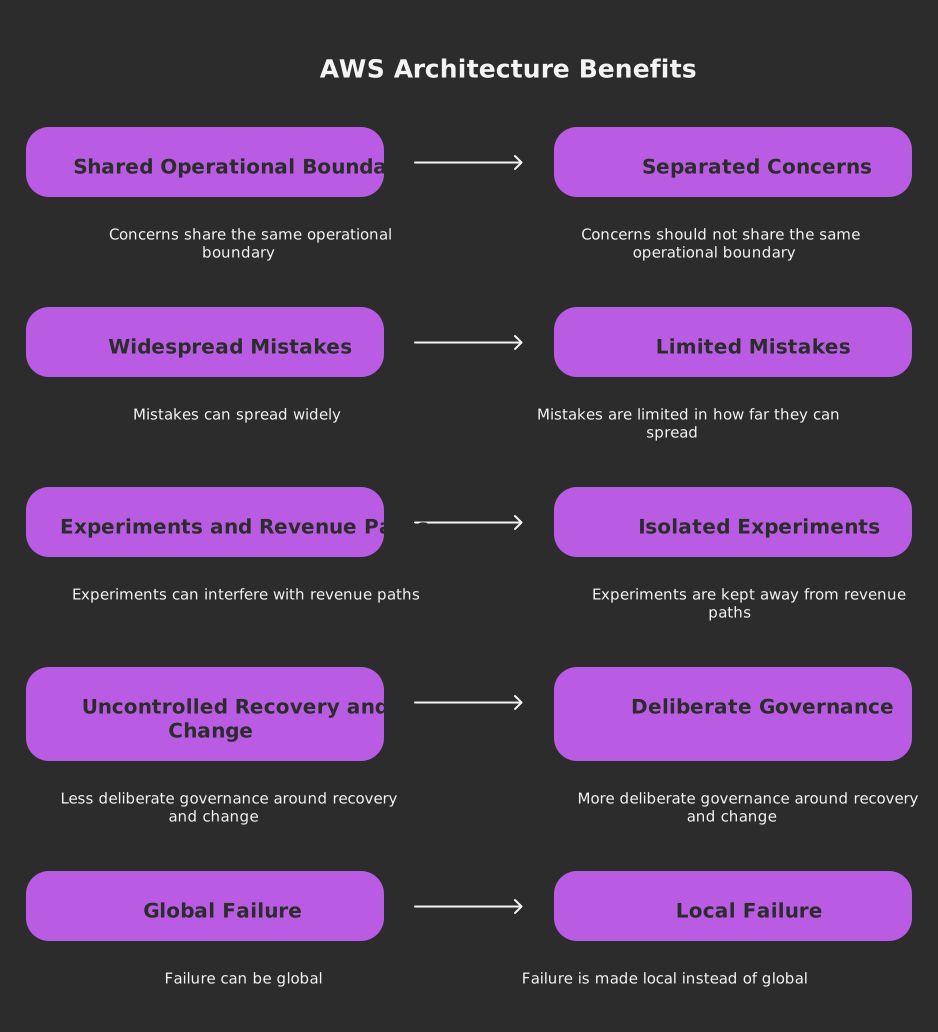
Multi-account AWS architecture is often framed as a scaling best practice. In enterprise SaaS systems, its deeper value is containment: reducing blast radius, separating regulatory concerns, isolating experiments, and making rollback safer.
Multi-account AWS setups are often described as a scalability best practice.
That description is not wrong.
But it is incomplete.
In enterprise SaaS systems, the deeper value of a multi-account strategy is usually not scale.
It is containment.
That distinction matters because architecture decisions are rarely judged by how well they support ideal future growth alone. They are judged by how well they behave when something changes unexpectedly, when a release goes wrong, when an experiment causes side effects, when permissions drift, or when a system that looked isolated turns out to be more entangled than expected.
In those moments, a multi-account strategy is not mainly an organizational convenience.
It is a control boundary.
And in live production systems, control boundaries matter.
The problem with calling it “best practice”
The phrase “best practice” often removes the operational reason behind a design decision.
A multi-account AWS setup can start to sound like the kind of thing mature companies are simply supposed to do once they become large enough.
That framing misses the point.
The real question is not whether a company is advanced enough to justify multiple accounts.
The real question is whether the platform benefits from stronger boundaries between different kinds of risk.
Because once workloads with different operational, security, regulatory, or release characteristics all sit inside the same account, every change becomes louder than it needs to be.
Permissions are broader. Failure domains are wider. Visibility can become noisier. Recovery decisions become more tangled. Experiments sit closer to revenue-critical systems than they should. And operational mistakes have more room to spread.
A multi-account strategy does not remove risk.
But it can localize it.
That is what makes it valuable.
Good AWS architecture makes failure local, not global
This is the core idea.
A well-designed multi-account setup reduces the chance that one class of change, one category of mistake, or one operational problem cascades farther than it should.
Instead of treating AWS as one large shared control plane, it creates more deliberate boundaries around environments, workloads, teams, and business concerns.
That changes how risk behaves.
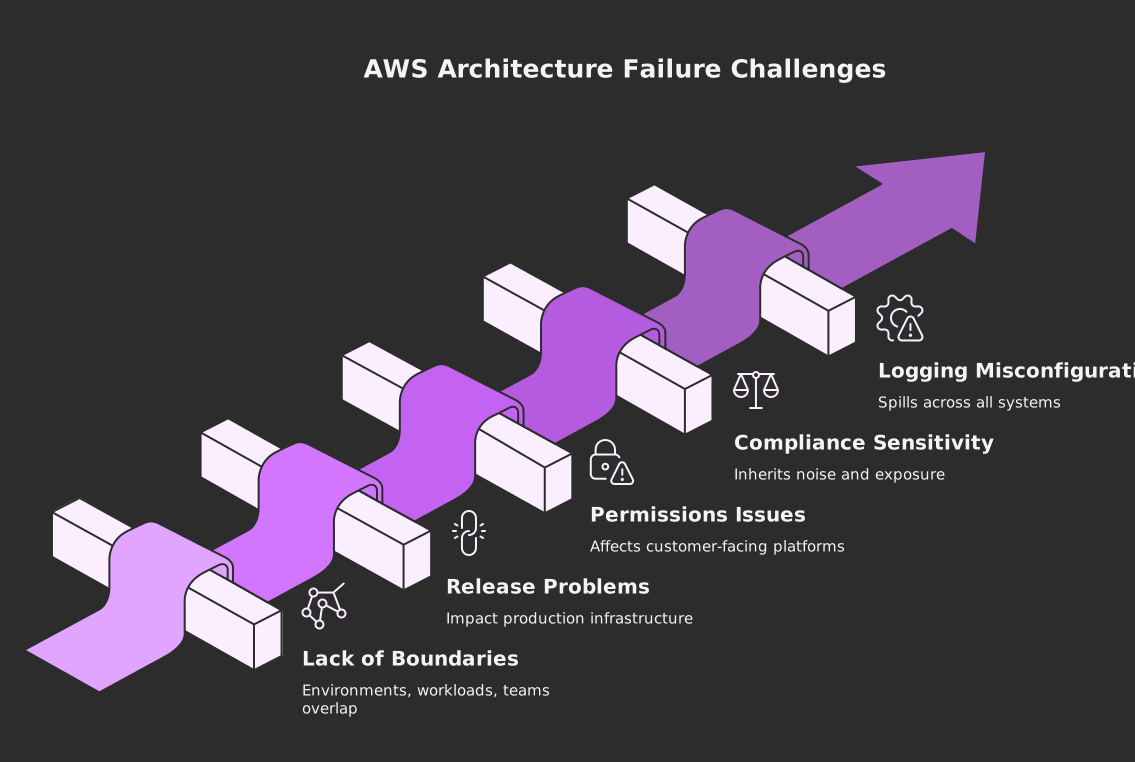
A release problem in one workload does not automatically sit next to production infrastructure for another. A permissions issue in an experimental environment does not need the same blast radius as a customer-facing platform. A compliance-sensitive workload does not need to inherit the noise and exposure of unrelated systems. A logging or monitoring misconfiguration does not have to spill across everything at once.
The point is not fragmentation for its own sake.
The point is making sure that when something goes wrong, the impact stays smaller, clearer, and easier to manage.
Blast radius is the first operational reason
The most immediate value of multi-account design is blast-radius control.
When too many systems live together inside one account, infrastructure mistakes can become platform-wide events faster than teams expect. IAM changes, networking errors, automation misfires, service-control mistakes, accidental deletions, or overly broad infrastructure deployments can all affect more than the team intended.
In contrast, a multi-account layout creates natural containment zones.
That does not guarantee safety. Teams can still build poor boundaries. They can still share too much. They can still replicate the same bad decisions across multiple accounts.
But the architecture at least gives them a chance to keep one problem from immediately becoming everyone’s problem.
That is not overengineering.
It is respect for live systems.
Regulatory and trust boundaries matter too
In enterprise SaaS, not all workloads carry the same trust and compliance profile.
Some systems touch sensitive data. Some support regulated workflows. Some handle internal operations only. Some exist for analytics, sandboxing, or experimentation. Some sit directly in the revenue path.
Treating all of those concerns as if they belong inside one operational boundary creates unnecessary tension.
A multi-account model allows teams to separate environments not just by stage, but by responsibility.
That can support clearer access control, tighter audit boundaries, better policy application, and more deliberate handling of regulated or customer-sensitive systems.
This is often more important than the raw infrastructure design itself.
Because in practice, architecture is not only about compute, storage, and networking.
It is also about who can touch what, how changes are governed, and how confidently an organization can explain its operational model to customers, procurement teams, auditors, or internal stakeholders.
Isolating experiments from revenue paths
This is another point that is often undervalued.
Innovation is healthy.
Experiments are necessary.
But experiments should not inherit the same operational relationship to production revenue systems as stable, customer-facing workloads.
When everything lives too close together, teams can end up in one of two bad states.
Either they become overly cautious because experimental work feels too close to critical systems.
Or they move too casually because the environment fails to communicate the seriousness of the boundary.
A multi-account approach makes the separation explicit.
It allows experimentation, tooling, prototypes, and emerging workloads to move in their own space, with their own controls and consequences, without quietly increasing exposure for systems that the business depends on every day.
That is not just a technical distinction.
It is an operational and governance distinction.
Rollback becomes a governance decision, not a scramble
One of the most practical advantages of stronger account boundaries is that rollback can become calmer.
When the architecture is flatter and more entangled, rollback decisions often become operational scrambles. Teams are trying to understand what changed, what else was touched, what shared resources may be affected, and whether reversing one action will destabilize something adjacent.
In a better-designed multi-account environment, the scope of the decision is narrower.
Teams can reason more clearly about where the issue lives, what boundary contains it, what dependencies cross that boundary, and what rollback options are realistically available.
This does not make recovery effortless.
But it improves the odds that rollback remains a deliberate control action instead of a reactive attempt to stop a wider incident.
That is a meaningful architectural improvement.
Multi-account is not automatically mature architecture
It is worth being careful here.
A company can adopt a multi-account AWS structure and still create confusion, duplication, weak guardrails, and brittle operations.
If identity is messy, account purpose is unclear, observability is fragmented, tagging is inconsistent, network relationships are poorly understood, or ownership is ambiguous, multiple accounts can create more overhead without delivering meaningful containment.
So the point is not “more accounts equals better architecture.”
The point is that the right account boundaries, with the right controls and operating model, can help risk behave more predictably.
That is very different from treating multi-account design as a maturity badge.
The operating model matters as much as the account structure
The benefits of multi-account design only become real when the operating model supports them.
That includes:
- clear account purpose
- explicit ownership boundaries
- consistent identity and access patterns
- centralized visibility where needed
- policy enforcement that reflects real risk
- deployment processes that respect account separation
- governance that distinguishes experimental work from regulated or revenue-critical workloads
Without that discipline, account boundaries remain cosmetic.
With it, they become a practical part of how the platform stays safer under change.
When single-account setups become a liability
A single-account layout is not automatically wrong.
For smaller systems, simpler internal tools, or earlier-stage products, it can be perfectly reasonable.
The problem begins when the operational reality becomes more complex than the account model.
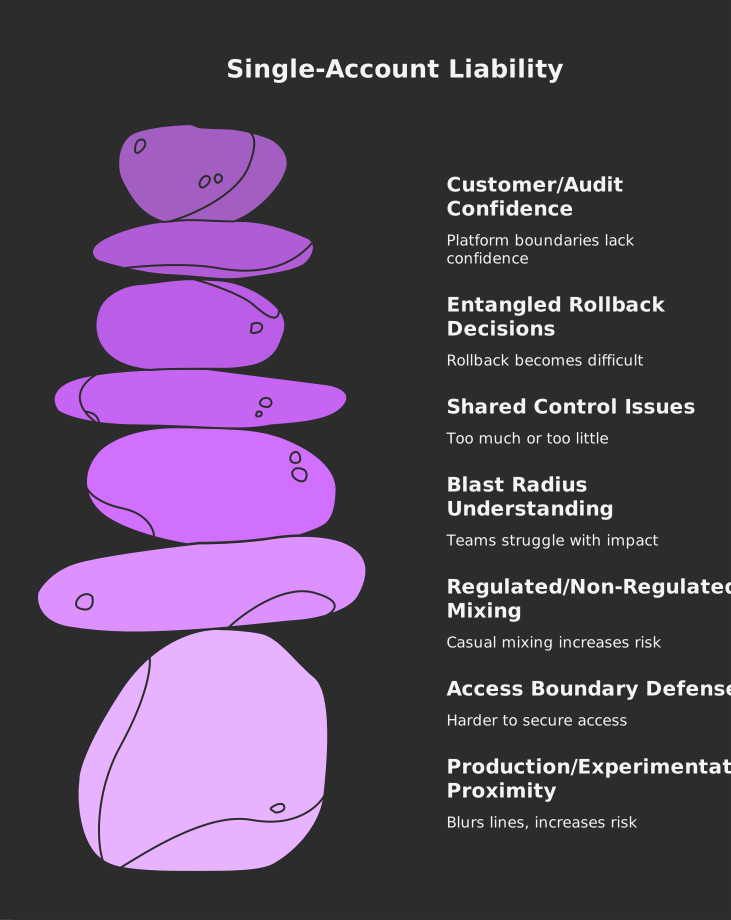
That usually shows up when:
- production and experimentation are too close together
- access boundaries are becoming harder to defend
- regulated and non-regulated workloads are mixed too casually
- teams struggle to understand the blast radius of infrastructure changes
- shared controls are doing too much or too little
- rollback decisions are harder because the environment is too entangled
- the organization needs stronger customer or audit confidence around its platform boundaries
At that point, staying in one account can create more hidden risk than simplicity.
A better way to think about the decision
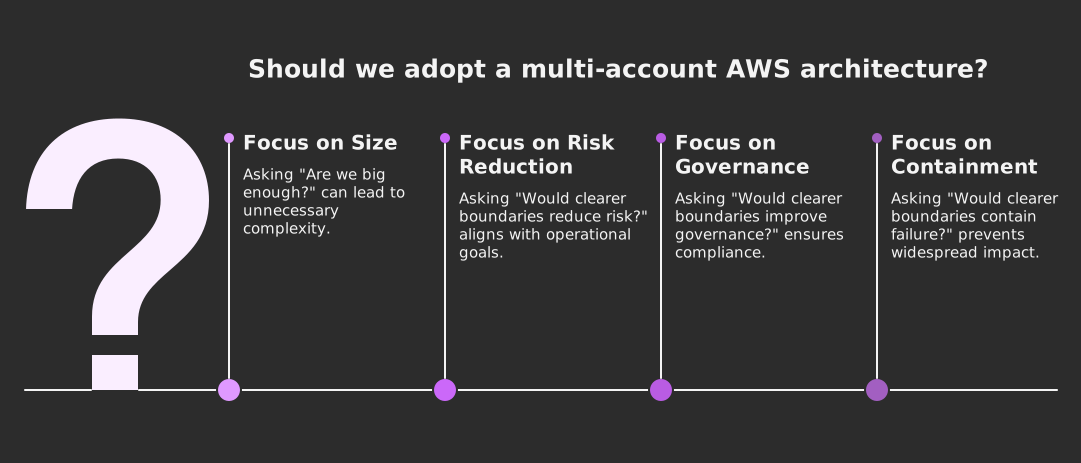
Do not ask only:
Are we big enough for multi-account AWS?
Ask instead:
Would clearer account boundaries reduce operational risk, improve governance, or contain failure more effectively in our current system?
That is the more useful question.
It moves the conversation away from cloud fashion and back toward architecture judgment.
In enterprise SaaS, that is usually where the real decision belongs.
Final thought
Multi-account AWS architecture is often described as a scaling pattern.
But in live enterprise systems, its value is frequently more immediate than that.
It helps separate concerns that should not share the same operational boundary.
It limits how far mistakes can spread.
It keeps experiments away from revenue paths.
It creates more deliberate governance around recovery and change.
In other words, it helps make failure local instead of global.
That is not just a cloud best practice.
That is a stability decision.